

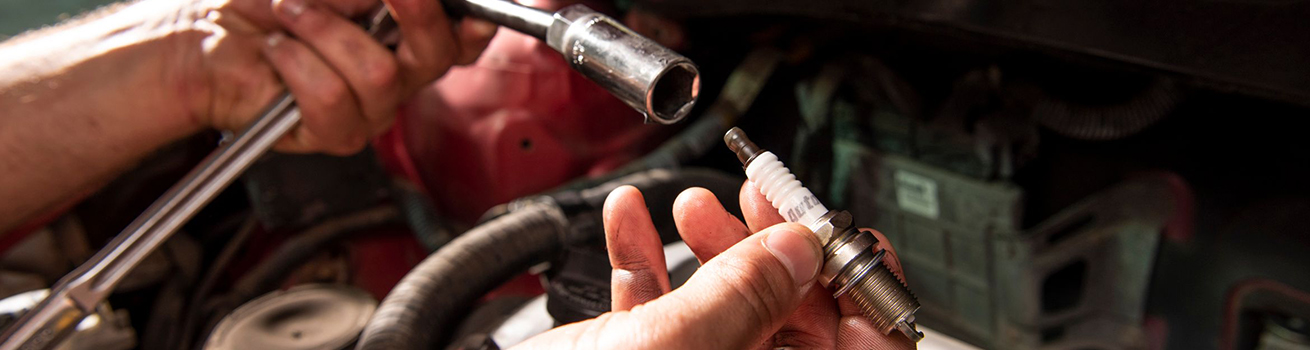

How to Change Spark Plugs
Spark plugs play a vital role in a car's performance and fuel economy. Worn-out or damaged spark plugs can lead to sluggish acceleration, hard starting, and misfiring, but you can prevent this by replacing your spark plugs on time. To ensure optimal results, it's essential to follow the correct procedures. Our step-by-step guide will walk you through the spark plug replacement process.
Step 1: Gather the tools
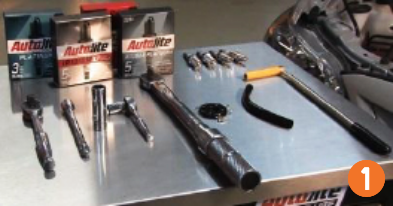
Gather needed tools and parts - a set of spark plugs, a ratchet, a spark plug socket (make sure you have the right size), extensions, a gapping tool, and dielectric grease. Other hand tools may be needed on some vehicles.
Step 2: Remove spark plug wires or coils

Grasp the plug wire boot and twist it about one-quarter turn to loosen the seal, and then pull straight off. Stubborn boots may require using plug wire boot pliers. Number plug wires with tape as you remove them to avoid crossing them, or only disconnect one at a time. If your vehicle is coil-on-plug, disconnect the coil connectors, remove the hold-down bolts, and remove the coils.
Step 3: Clean the plug seat area

Before loosening each spark plug, clean dirt or fluids out of the plug seat area with a blast of compressed air, a shop vacuum, or by blowing around the spark plug through a soda straw. This prevents contaminants from falling into combustion chamber when the old plugs are removed.
Step 4: Remove the spark plugs and inspect them

Remove plugs and line them up in cylinder order. A thorough visual inspection of the plugs can identify problems that may need correction or show you they are all good. Autolite® publishes a plug tip inspection guide with more information.
Step 5: Gap new plugs

Gap new plugs as recommended in owner's manual or Autolite® Spark Plug Catalog. Use a gapping tool gauge to measure the gap between the center and ground electrode. The gauge should pass through snugly but easily. If too loose or tight, use the gapping tool to correct the gap.
Step 6: Screw the new spark plugs

Screw new plugs in by hand until tight. If a plug tightens up too soon while turning them in by hand, use a thread chaser to clean the threads. Use a torque wrench to tighten spark plugs following manufacturer’s recommendations, or refer to the torque chart in the Autolite® Spark Plug Catalog if you don’t have a torque wrench.
Step 7: Inspect the plug wires and boots

Inspect the plug wires and boots (or the coils and boots on coil-on-plug systems) for brittleness or cracking, and check for corrosion on the plug terminals inside each boot. Replace suspect coils, boots and or wires as needed. Lubricate the plug contact area inside each boot with Dielectric Grease and then reinstall the plug wires (or coils and boots) making sure they are installed in the correct order and fastened securely.
Step 8: Start up the engine

Verify your repair by starting the engine. Misfires or a rough idle can mean the wires are in the wrong order or loose. Recheck firing order and coil connections closely if the engine still isn't running right.
Note #1: We recommend to replace spark plugs as a complete set. This is especially important with computer-controlled ignition systems.
Note #2: It is very important to properly tighten all of the spark plugs. Too little torque can cause the spark plug to leak combustion gases. Over-torquing the spark plug can damage both the plug and the threads in the cylinder head.
Note #3: Do not use any grease or lubricant on the spark plug threads since this may result in inaccurately torquing the spark plugs, and could lead to multiple issues.