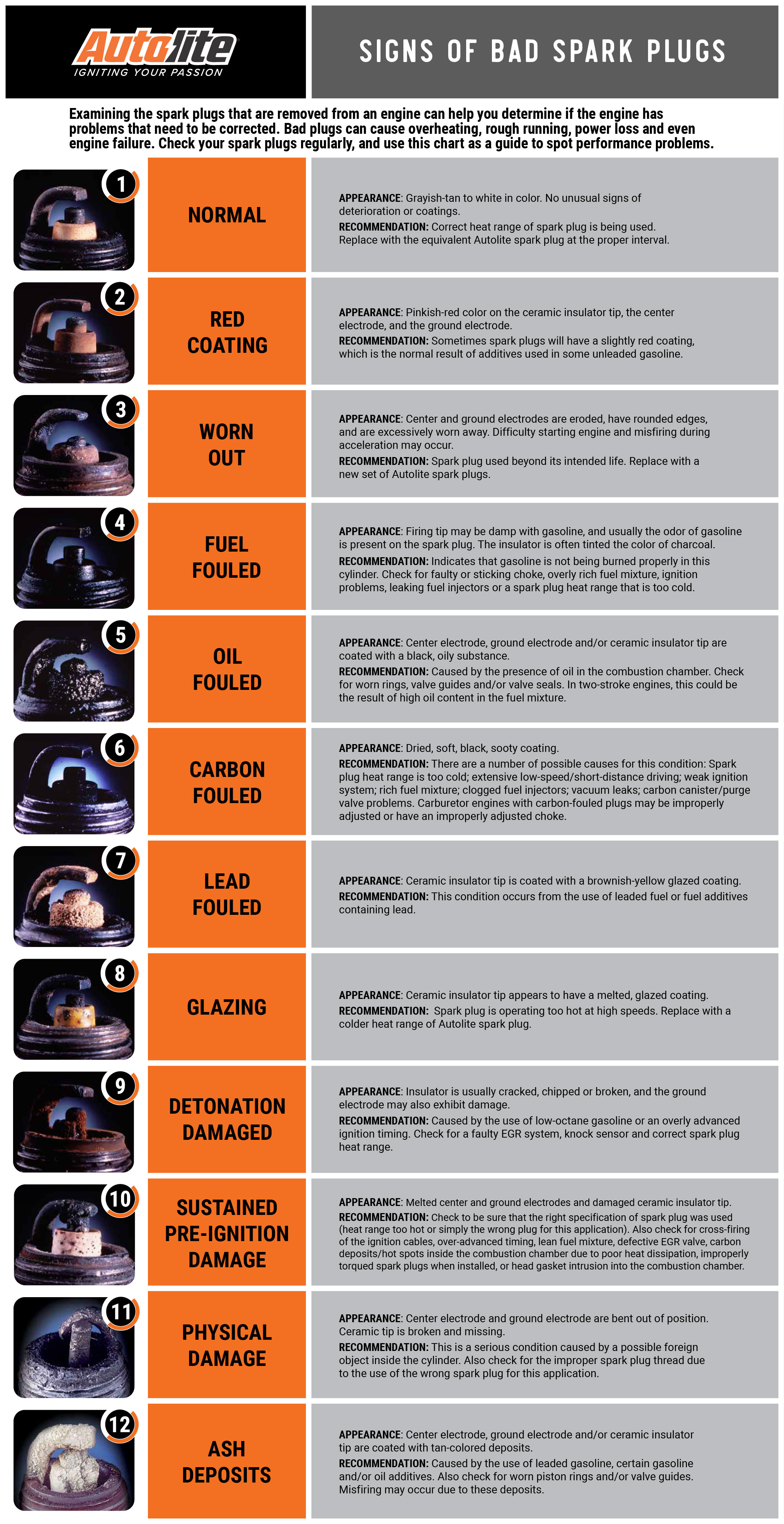

Signs of Bad and Fouled Spark Plugs
Whether it's fouling, damage, or simple wear and tear, the underlying problem with a fouled or bad spark plug is the same: it isn't able to ignite the air-fuel mixture in the cylinder reliably. This disrupts the combustion process, which is essential for your engine to perform correctly. Bad or fouled plugs can cause a range of issues for your engine. Check your spark plugs regularly to avoid these issues and use this article as a guide to identify the symptoms of bad and fouled spark plugs.
What is a Fouled Spark Plug?
Both bad and fouled spark plugs are bad news for your engine. They lead to similar problems, so it's best to address them quickly.
Spark plugs can become "fouled" by excessive fuel, oil or combustion deposits in the combustion chamber. Essentially what this means is that the spark plug tip has become coated or covered by deposits. When this happens, the spark plug will not fire reliably.
While fouled spark plugs can sometimes be cleaned, heavily coated oil, carbon, or fuel deposits that can't be easily removed signify the plug should be replaced.
A worn-out spark plug, on the other hand, has suffered physical damage or has reached the end of its intended life. This could be due to cracks in the insulator, worn electrodes, or other issues. Bad spark plugs need to be replaced to keep your engine running smoothly.
Symptoms of Worn-Out and Fouled Spark Plugs
Both worn-out and fouled spark plugs show the following symptoms:
- Engine misfires: An engine will misfire when worn-out spark plugs delay the combustion timing. This happens when a cylinder fails to fire properly or only fires sporadically. Beyond stumbling, you might feel "jerking" when accelerating, similar to how a manual car feels if you release the clutch too quickly.
- Check engine light comes on: Modern engine control systems monitor combustion timing. Constant misfires often trigger the check engine light to alert the driver.
- Rough idling: Engine vibration and irregular running at idle due to uneven power delivery from the misfiring cylinders. Notice if the vibrations feel rougher than usual or are accompanied by unusual exhaust sounds (popping or sputtering). This isn't always noticeable on modern engines, as they have systems to try and compensate.
- Trouble starting: The engine requires prolonged cranking to start, especially in cold weather, as the worn-out spark struggles to start the combustion process.
- Lack of acceleration: Misfires under load feel especially pronounced. You might notice that uphill sections feel much harder than usual, or the engine loses steam during overtaking.
- Poor fuel economy: Keep an eye on your gas gauge; drastic unexplained drops in MPG often go hand-in-hand with spark plug performance. If your car has a trip computer with live fuel economy readings, abnormal fluctuations there can hint at an issue.
Not all these symptoms mean it's definitely the spark plugs. Other common culprits to rule out are issues with the ignition coils, fuel system, or engine sensors. However, these signs indicate it is time to investigate, and spark plugs are usually the first to check and diagnose.
What Causes Spark Plugs to Wear Out?
Spark plugs wear out due to a combination of factors. Primarily, the constant barrage of high voltage sparks erodes the electrode materials over time, widening the gap and weakening the spark. Heat and combustion byproducts contribute to this wear, and deposits can exacerbate the issue. Additionally, a rich fuel mixture, incorrect spark plug type, or underlying engine malfunctions can cause premature wear. Spark plugs are consumable parts, designed to be replaced after a certain number of miles.
Causes of Spark Plug Fouling
Many different factors can contribute to spark plug fouling:
- The air/fuel ratio is too rich due to incorrect carburetor adjustment or a poorly performing fuel injection system
- Worn piston rings or valve seals may allow too much oil to enter the combustion chamber
- The ignition system may not be performing properly
- Prolonged idling or continuous low-speed driving may keep the spark plugs from reaching optimum operating temperatures
- Use of a spark plug with a heat range that is too cold
- A dirty air filter
- Using an inferior plug with different metallurgy or design. E.G. copper plug instead of Iridium fine wire.
What Do Bad Spark Plugs Look Like?