


Spark Plug Heat Range
Understanding and choosing the correct heat range for your spark plugs is important for a healthy engine.
What is a Spark Plug's Heat Range?
The heat range of a spark plug refers to its ability to manage heat. The ideal heat range maintains the spark plug's tip at the perfect temperature to burn off deposits without causing damage. Different engine designs require different amounts of this heat transfer. These differences are called the heat ranges of the spark plug:
- The same spark plug design may be available in several different heat ranges
- It is important to use a plug with a combatable rating for each application as each plug may have a different notation by manufacturer
- The correct heat range will allow the plug and engine to perform properly
Why is Heat Range Critical?
 Heat range is the measure of how fast the spark plug dissipates heat. It determines how well a spark plug can handle the heat inside your engine. It changes the temperature of the spark plug. If the heat range is too cold, the deposits will not burn off the tip and the spark plug will foul. If the spark plug heat range is too hot, pre-ignition can occur.
A switch in the heat range of the spark plug will change the temperature of the spark plug tip by 50 to 150 degrees depending on design. It must do this in a controlled manner — while adapting to specific engine characteristics and widely varying driving conditions
How is Heat Range Engineered?
Heat is conducted away from the spark plug through contact of the insulator and the shell to the cylinder head. Thus, heat ranges are primarily controlled by the amount of contact through which the heat must travel before escaping to the cylinder head.
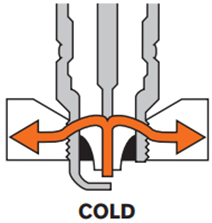
A "cold" spark plug typically has very little projection of its ceramic insulator and the insulator has a lot of contact with the shell to dissipate the heat through the head.

A "hot" spark plug has contact and more surface area exposed in the combustion chamber. This spark plug will stay hotter, helping to burn off residue and deposits. The longer the path, the slower the heat dissipates and the hotter the plug.
Signs of Bad Spark Plug Heat Range
If the spark plug used in an engine is too hot for its application, it could result in:
- Excessive rate of electrode erosion, excessive gap growth
- Center and ground electrode damage (burned or melted)
- Damaged engine valves
- Damaged pistons due to excessive pre-ignition
Select the Right Heat Range
If you are unsure of the correct heat range to use, always start with a colder spark plug. If the plug is too cold, the plug will eventually foul and a misfire will occur. This will not hurt the engine. Unfortunately, though, if a spark plug that is too hot is inadvertently chosen, pre-ignition and detonation can damage your engine. Don’t go to a hotter heat range unless you’ve consulted your engine experts.
Working closely with engine manufacturers, Autolite® engineers have developed plugs in many heat ranges to suit all engine applications. Here you can enter the make, model, and year of your car to find the best spark plug for you in the correct heat range.